Tonkeeper is a self-custody wallet for GRAM payments, TON dApps, swaps, NFTs, and subscriptions
The short version: Self-custody TON wallet for storing and paying with GRAM, with a built-in dApps browser for NFTs, domains, and Telegram assets.
Tonkeeper is a self-custody wallet built for The Open Network, where users hold GRAM, USDT on TON, USDT TRC20, NFTs, TON Domains, and Telegram-linked assets in one account. Its practical appeal is the way payments, QR codes, decentralized swaps, staking, and a dApp browser live inside the same wallet screen, so daily TON activity moves through one familiar interface.
This angle matters because the wallet is less about passive storage and more about using crypto on TON. A holder who receives GRAM from a friend, pays a service invoice, swaps into another token, checks an NFT collection, and opens a marketplace does not need to jump between unrelated tools. The wallet keeps private-key control with the user while making on-chain actions feel closer to a mobile payment app.
GRAM payments start with a wallet address, a QR code, or a Telegram-native flow
The clearest everyday use case is payment. Tonkeeper supports receiving GRAM and other tokens into a personal wallet address, then spending from that balance through direct transfers or QR codes. On TON, transactions settle with low network fees and fast confirmation, which fits small payments, app interactions, and recurring activity better than a wallet designed only for occasional long-term holding.
Payment screens matter because crypto mistakes usually happen at the moment of sending. The user chooses the asset, reviews the destination, checks the amount, and confirms the transaction locally. A QR code reduces address typing, while saved contacts and human-readable TON Domains reduce friction when the recipient has set up a name rather than a long string of characters.
Built-in swaps turn the wallet into a TON trading surface
Swaps inside Tonkeeper connect the wallet balance to decentralized exchangers, including TON ecosystem liquidity venues such as STON.fi. The flow is direct: pick the token to sell, pick the token to receive, review the quoted rate and network fee, then sign the transaction from the wallet. The assets stay under self-custody until the swap transaction is authorized.
That setup suits users who earn, receive, or hold several TON assets and want to rebalance without moving funds to a centralized exchange for every trade. Slippage still matters. Thin liquidity, volatile tokens, and rushed confirmations create worse execution, so the quote screen deserves attention before the final signature.
The dApp browser connects NFTs, domains, and marketplaces without leaving the account
The built-in browser is the part that makes Tonkeeper feel like a gateway to TON rather than a static vault. It opens TON apps from inside the wallet, then asks for permission when an app needs a connection or transaction signature. That structure supports marketplaces, games, domain services, and DeFi interfaces while keeping the wallet as the signing layer.
Several named destinations show the shape of this ecosystem. Getgems is associated with NFT trading on The Open Network. TON Domains lets users assign human-readable names to wallet addresses. TON Diamonds serves digital art and collectible communities. Fragment is known for Telegram usernames and anonymous numbers. Together, these apps explain why the browser belongs next to balances and payments instead of behind a separate extension-only workflow.
USDT on TON and TRC20 support widens the payment menu
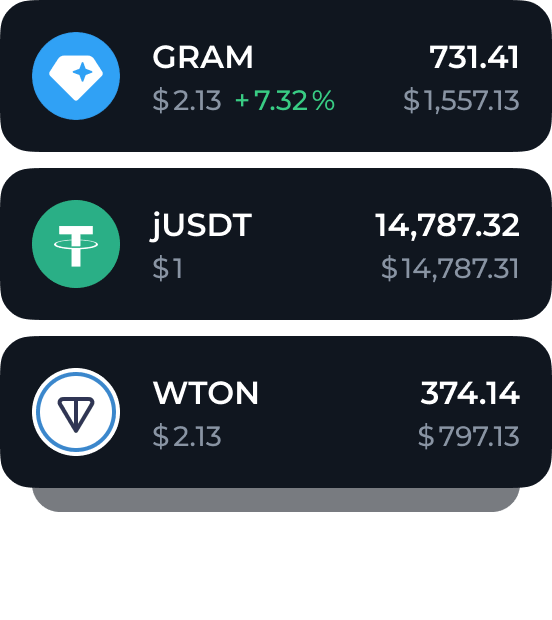
Stablecoin support changes how a wallet gets used. GRAM works as the native TON asset for network activity, while USDT on TON gives users a dollar-denominated token inside the same environment. Support for USDT TRC20 on TRON adds another familiar rail for people who already receive or send Tether through that network.
Keeping these balances visible in one place helps with simple treasury behavior: receive a stablecoin, hold GRAM for fees and TON apps, and move between assets when a payment or dApp action calls for it. Tonkeeper does not remove the need to choose the right network. A USDT transfer sent on the wrong chain creates a recovery problem, so the network label belongs in the same mental checklist as the amount and recipient.
Staking adds a native way to put idle GRAM to work
Staking is another wallet-native action. A GRAM holder can use the wallet to participate in TON staking flows and track the position beside regular balances. This is useful for people who want the wallet to remain the main dashboard instead of managing a separate staking account through a standalone website.
The important distinction is control. The wallet presents the staking action and signs the transaction, while the blockchain and staking mechanics define when funds move, how rewards accrue, and what exit process applies. Reading the transaction details before signing is enough to understand whether funds are being transferred, delegated, or committed to a contract interaction.
Setting up the wallet is really about protecting the signer
Getting started begins with the app choice: iOS, Android, Tonkeeper Pro, Telegram access, or a browser extension. After installation, the wallet creates or imports an account and asks the user to secure the recovery phrase. That phrase is the recovery path for the account, so it belongs offline and away from screenshots, chats, and cloud notes.
Signer for Tonkeeper exists for users who want a separate signing setup. Keeping signing isolated from browsing and daily app use adds a stronger boundary for people who handle larger balances or frequent dApp approvals. It also makes the account model easier to reason about: one environment displays and prepares actions, while the signing device confirms what actually reaches the chain.
A normal session moves from balance check to signature review
A good wallet workflow is repeatable. Open the app, check the visible balances, select the exact token, choose a destination or app, inspect the network fee, and confirm only after the action matches the intent. Tonkeeper makes that sequence compact, especially on mobile, because payments, swaps, staking, NFTs, and dApps are not split across separate products.
- Keep GRAM available for TON network fees.
- Use QR codes or TON Domains when they reduce address-entry risk.
- Review token symbols and networks before sending USDT.
- Check swap output and slippage before signing.
- Disconnect dApps that no longer need wallet access.
This routine is simple enough for regular payments and strict enough for higher-value actions. The wallet helps expose the next step, but the signature is still the user's approval.
Where it differs from exchange wallets and general multi-chain wallets
An exchange wallet focuses on account balances inside a custodial platform. A broad multi-chain wallet focuses on many networks at once. Tonkeeper is narrower and deeper: it is built around TON, GRAM payments, TON-native apps, NFTs, domain names, Telegram-linked assets, and the wallet actions that make those features usable from a phone.
That specialization is the advantage when the user's activity lives mostly on The Open Network. The app does not need to be everything for every chain. It gives TON users a direct route from token balance to payment, from payment to swap, and from swap to dApp interaction without forcing the user to assemble a toolkit from unrelated extensions and sites.
The strongest fit is active TON usage, not idle balance watching
People who only want to park a token and ignore it for months need very little interface. Active TON users need more: quick sends, stablecoin handling, NFT display, staking access, swap routing, Telegram-adjacent assets, and a browser that understands TON dApps. Tonkeeper fits that second pattern because it keeps these actions close to the account that signs them.
The wallet's best use is a practical one. Receive funds, keep enough GRAM for fees, pay by address or QR code, swap when the balance mix changes, open trusted TON apps, and manage collectibles or domains from the same place. That is the everyday value of a focused TON wallet: it turns a chain account into a usable payment and application workspace.
Tonkeeper - common questions
Fees on Tonkeeper swaps: what costs should I expect?
A swap includes the TON network fee plus the price impact and liquidity conditions from the decentralized exchange route used for the trade. The wallet shows the transaction details before signing, including the asset being sold, the asset being received, and the estimated output. GRAM is still needed for TON network fees, even when the swap involves another token.
Do I need GRAM if I only want to use stablecoins?
Yes, keeping some GRAM available is practical because TON transactions require the native asset for network fees. A stablecoin balance covers the payment amount, but the chain still needs its fee token to process transfers, swaps, staking actions, and dApp transactions. Without GRAM for fees, an otherwise funded wallet has limited ability to move assets on TON.
Which Telegram-related assets are managed through this wallet flow?
Telegram-adjacent activity includes assets such as usernames and anonymous numbers traded through Fragment, along with TON-based tokens, NFTs, and domains that connect to the wider TON ecosystem. The wallet acts as the account and signing layer. The actual marketplace or dApp presents the asset action, and the wallet confirms the transaction before it reaches the blockchain.
What happens if a dApp asks for wallet access?
A dApp connection lets the app see the wallet address and request signatures for actions such as swaps, purchases, listings, or contract interactions. The connection alone is different from approving a transaction. Review each signature request for the asset, amount, destination, and network fee. Disconnecting unused dApps later reduces clutter and limits future prompts from services you no longer use.
Recovering access after changing phones: what matters most?
The recovery phrase controls account restoration. After installing the wallet on a new device, importing that phrase restores the same blockchain account and balances because the assets live on-chain, not inside the old phone. A lost phrase changes the situation completely: the wallet provider cannot recreate private keys from an email address, username, or support ticket.
Is Tonkeeper Pro required for ordinary GRAM payments?
No. Regular mobile wallet use covers receiving, sending, QR payments, swaps, NFTs, staking access, and dApp browsing for most users. Pro is aimed at people who want a more advanced or desktop-style workflow. The right choice depends on how often you transact, whether you manage several accounts, and whether your TON activity is mainly mobile or workstation-based.