Tonkeeper is a self-custody TON wallet for Gram payments, staking, swaps, NFTs, and dApps
The short version: Non-custodial TON wallet for storing, paying, swapping, and using dApps, with built-in GRAM staking for users managing tokens.
Tonkeeper is a non-custodial wallet for The Open Network that gives users one place to hold Gram, USDT on TON, USDT TRC20, NFTs, domain names, and other TON-based assets. It is built for daily wallet actions: receiving tokens, paying by address or QR code, swapping through decentralized liquidity, staking Gram, and opening dApps without moving funds through a centralized account.
Daily TON payments inside one wallet
The strongest use case is routine movement of value on TON. A user opens the wallet, chooses an asset, enters a recipient or scans a QR code, reviews the network fee, and signs the transfer. Because TON settles quickly and fees stay low by design, small payments and frequent transfers fit the product better than on chains where every action becomes a cost decision.
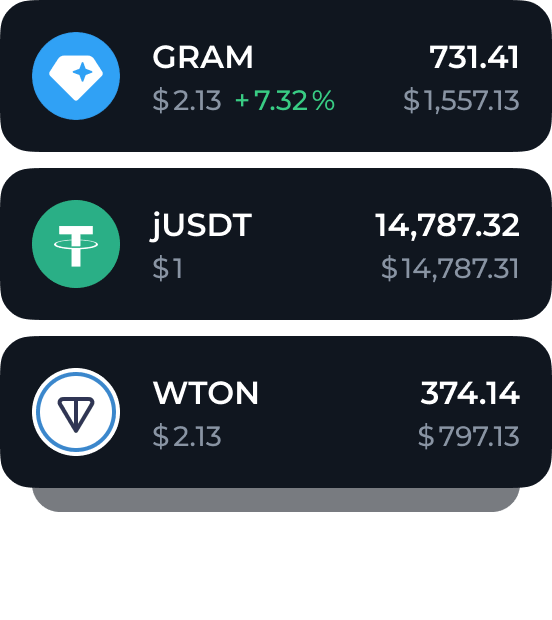
That payment focus also shapes the interface. Balances, incoming transfers, outgoing transactions, and address details sit close to the actions people repeat most. Tonkeeper supports Gram and other tokens in the same portfolio view, so users who receive salary, tips, trading proceeds, or app rewards in different assets do not need separate tools for basic custody.
How self-custody works in the app
A self-custody wallet creates and stores the keys that authorize blockchain transactions. Those keys stay under the user's control, and the recovery phrase becomes the backup for restoring access on a new device. Tonkeeper acts as the signing interface: it prepares the transaction, shows the details, and asks the user to approve the action before it reaches the network.
This design is powerful because the wallet does not need an exchange login to send assets, connect to a dApp, or receive a payment. It also makes the recovery phrase the most important item in the setup process. Anyone who loses it loses the practical route back into the wallet, and anyone who reveals it gives another person the ability to move funds.
Gram staking from a mobile portfolio
Staking turns idle Gram into a network participation position. Inside Tonkeeper, the flow is designed for users who want to delegate through a wallet interface rather than run validator infrastructure. The user selects an amount, reviews the staking terms shown in the app, confirms the transaction, and tracks the position alongside spendable balances.
Rewards come from the staking system around TON validators, and the visible return changes as network conditions and validator settings change. That makes the staking screen a management area rather than a one-time deposit page. Users should look at the lockup, unstaking timing, validator information, and fee details before moving a large balance into a staking position.
Swaps and liquidity routes on TON
Token swaps are routed through decentralized exchangers rather than a custodial trading account. The wallet shows the offered rate, the asset pair, the amount to receive, and the transaction cost before signing. This gives the user a direct path from holding Gram to holding another TON token without first sending funds to a centralized exchange.
STON.fi is one of the TON ecosystem names users encounter when exploring decentralized exchange liquidity. A wallet-level swap experience reduces friction, but it does not remove market mechanics. Thin liquidity widens spreads, volatile tokens move between quote and confirmation, and small unknown assets carry smart contract and market risk. The useful habit is to check the final receive amount, not just the pair name.
USDT on TON and USDT TRC20 support
Stablecoin support matters because many crypto users think in dollar-denominated balances even when they use fast networks for payments. Tonkeeper lists USDT on TON and USDT TRC20 support, giving users access to two common stablecoin routes from the same wallet environment. The chain label matters: a TON transfer address and a TRON transfer address belong to different networks.
When moving USDT, the sending network, receiving network, and destination format must match. This is where a wallet's transaction review screen earns attention. The asset name alone does not tell the whole story, because USDT exists on several chains. Choosing the right network before confirmation prevents the most common stablecoin transfer mistake.
NFTs, TON Domains, and collectible identity
The wallet reaches beyond fungible tokens. NFTs on TON appear as collectibles, and ecosystem services such as Getgems and TON Diamonds give users places to discover, buy, and manage digital art or collections. Tonkeeper also surfaces TON Domains, which turn long wallet addresses into human-readable names that are easier to share and recognize.
Those identity features matter in payment contexts. A readable domain gives a recipient a more memorable destination, while NFT support lets the same wallet hold assets used for communities, memberships, artwork, and marketplace activity. This keeps the user's TON identity, payment address, and collectible inventory close together instead of scattering them across unrelated apps.
dApps without leaving the wallet flow
The built-in browser connects the wallet to decentralized applications on The Open Network. A user can open a marketplace, exchange, domain service, or other app, then approve wallet requests from the same device. That connection model makes the wallet the permission layer for Web3 activity: sites request signatures, and the user decides whether to approve the exact action shown.
Telegram also sits near the TON ecosystem, and Tonkeeper offers access paths that include mobile apps, browser extensions, Pro, and Telegram-related use. The important distinction is the signed transaction. Whether a user starts from a browser, phone, or Telegram surface, value moves only after the wallet presents the request and receives approval.
Getting set up for the first transaction
Setup starts with installation on iOS, Android, a browser extension, or another supported surface. After creating a wallet, the user records the recovery phrase, sets local device protection, and receives a TON address. From there, the first useful test is a small incoming transfer, followed by a simple outgoing payment or swap after the balance appears.
A clean first-session flow looks like this:
- Create the wallet and store the recovery phrase offline.
- Turn on the device-level lock or biometric approval.
- Receive a small amount of Gram before funding more assets.
- Check the network fee and recipient before sending.
- Explore staking, swaps, and dApps only after the basic transfer flow is familiar.
This order builds practical confidence. It also separates wallet setup from investment decisions, which keeps mistakes smaller while the interface is still new.
Where it fits among TON wallet choices
TON users choose wallets by custody model, device support, ecosystem access, and how much they value integrated features. Tonkeeper is strongest for people who want a polished self-custody wallet with payments, swaps, staking, NFTs, and dApps in one place. Users who trade heavily still use exchanges for order books and fiat rails, while users who prioritize multisignature treasury management look for tools built around shared approvals.
For everyday TON activity, the appeal is consolidation. The same wallet can receive Gram, hold USDT, pay a merchant by QR code, stake a portion of a balance, open Getgems, manage a TON Domain, and interact with STON.fi. That breadth makes it a practical default wallet for users whose crypto life already centers on The Open Network.
Fees, speed, and the habits that keep costs clear
TON's low-fee design makes frequent wallet activity realistic, but every on-chain action still has a network cost. Transfers, swaps, staking operations, NFT purchases, and dApp approvals each carry their own transaction details. Tonkeeper presents those details before confirmation, which is where users see the amount, recipient, token, and fee together.
The best workflow is simple: read the review screen, confirm the network, and approve only the action that matches the intent. On fast chains, speed is a benefit only when the user slows down enough to catch the address, token, and permission details before signing. That rhythm turns the wallet from a storage app into a reliable operating surface for TON.
Things people ask about Tonkeeper
What fees do users pay when sending Gram from the wallet?
A Gram transfer uses TON network fees, and the wallet shows the fee before the user signs the transaction. The exact amount changes with network conditions and the transaction type, but TON is designed for low-cost transfers. Swaps, staking actions, NFT purchases, and dApp approvals have separate transaction costs, so each confirmation screen should be read before approval.
Can I use Tonkeeper without creating an exchange account?
Yes. A self-custody wallet does not require a centralized exchange account for basic receiving, sending, staking, swapping, or dApp signing. Users create a wallet, save the recovery phrase, and control the address directly. An exchange is still useful for fiat on-ramps, cashing out, or deep order-book trading, but it is separate from holding and using assets on TON.
Which devices support the wallet experience?
The official product line includes iOS, Android, browser extensions, Pro, and Telegram-related access. Mobile is the natural starting point for payments, QR codes, and quick confirmations, while a browser extension suits desktop dApp sessions. A user should keep the same recovery phrase protected across devices and treat each installed wallet surface as an approval point for transactions.
Does staking Gram lock the entire wallet balance?
Staking applies to the amount the user chooses for the staking transaction, not every asset in the wallet. The spendable balance remains separate from the staked position. Before staking, the user should review the displayed terms, validator details, unstaking timing, and expected reward information. Keeping some Gram liquid helps cover future transfers and network fees.
Recovering access after a phone is lost, what is required?
Recovery depends on the wallet's recovery phrase. With the phrase, a user can restore the wallet on another supported device and regain access to the same addresses and assets. Without it, the app installation alone is not enough to reconstruct control of the keys. The phrase should be stored offline and kept separate from screenshots, chats, cloud notes, and shared devices.
Is USDT on TON the same transfer route as USDT TRC20?
No. USDT on TON and USDT TRC20 are the same stablecoin brand on different blockchain networks. The sending network, receiving network, and destination address format must match. A user moving USDT should check the chain label before confirming a transfer, because choosing the wrong network creates a recovery problem that the wallet interface cannot automatically fix.